Compare commits
4
Commits
| Author | SHA1 | Date | |
|---|---|---|---|
 Harshavardhana |
2b4cdb5722 | ||
|
Harshavardhana
|
d2724d851a | ||
|
Harshavardhana
|
9ae1b2affa | ||
|
Harshavardhana
|
6af85d7e1a |
@@ -1,3 +0,0 @@
|
||||
.git
|
||||
.gitea
|
||||
out
|
||||
@@ -1,233 +0,0 @@
|
||||
name: release
|
||||
|
||||
on:
|
||||
push:
|
||||
branches: ['**']
|
||||
workflow_dispatch:
|
||||
|
||||
concurrency:
|
||||
group: release-${{ github.ref }}
|
||||
cancel-in-progress: false
|
||||
|
||||
jobs:
|
||||
release:
|
||||
runs-on: ubuntu-latest
|
||||
timeout-minutes: 90
|
||||
permissions:
|
||||
contents: read
|
||||
env:
|
||||
KIND: minio
|
||||
BIN: minio
|
||||
PKG: minio
|
||||
REGISTRY: git.vezha.io
|
||||
steps:
|
||||
- name: AC1 checkout the recipe
|
||||
uses: https://git.vezha.io/actions/checkout@v4
|
||||
with:
|
||||
persist-credentials: false
|
||||
|
||||
- name: AC2 pins are complete and well formed
|
||||
id: pins
|
||||
run: sh vezha/gates.sh pins "$KIND" | tee -a "$GITHUB_ENV" | tee -a "$GITHUB_OUTPUT"
|
||||
|
||||
- name: AC3 no unpinned reference and workflow lint
|
||||
run: sh vezha/gates.sh refs "$KIND"
|
||||
|
||||
- name: tools docker cli and jq
|
||||
run: |
|
||||
command -v docker >/dev/null 2>&1 || { apt-get update -qq; DEBIAN_FRONTEND=noninteractive apt-get install -y -qq docker.io >/dev/null; }
|
||||
command -v jq >/dev/null 2>&1 || { apt-get update -qq; DEBIAN_FRONTEND=noninteractive apt-get install -y -qq jq >/dev/null; }
|
||||
docker version --format 'client {{.Client.Version}} server {{.Server.Version}}'
|
||||
jq --version
|
||||
|
||||
- name: AC1 provenance of the import, anonymous
|
||||
run: sh vezha/gates.sh provenance-remote
|
||||
|
||||
- name: AC1 checkout the pinned upstream source
|
||||
uses: https://git.vezha.io/actions/checkout@v4
|
||||
with:
|
||||
ref: ${{ steps.pins.outputs.UPSTREAM_COMMIT }}
|
||||
path: src
|
||||
fetch-depth: 1
|
||||
persist-credentials: false
|
||||
|
||||
- name: AC1 source tree is at the pinned commit
|
||||
run: sh vezha/gates.sh provenance-src
|
||||
|
||||
- name: AC7 source offer URLs answer anonymously
|
||||
run: sh vezha/gates.sh source-urls
|
||||
|
||||
- name: negative controls, every gate must refuse its planted input
|
||||
run: sh vezha/gates.sh self-test
|
||||
|
||||
- name: names and build arguments
|
||||
run: |
|
||||
TAG=$(sh vezha/gates.sh make-tag)
|
||||
{ echo "TAG=$TAG"; echo "IMG=$REGISTRY/para/$PKG:$TAG"; echo "LOCAL=vezha-build-$KIND:$GITHUB_RUN_ID"; } >> "$GITHUB_ENV"
|
||||
mkdir -p out
|
||||
sh vezha/gates.sh pins "$KIND" | sed 's/^/--build-arg=/' > out/build-args
|
||||
echo "tag $TAG"
|
||||
|
||||
- name: AC2 pins stage proves the source tree and the module
|
||||
run: |
|
||||
mapfile -t ARGS < out/build-args
|
||||
docker build --target pins -f vezha/Dockerfile "${ARGS[@]}" -t "$LOCAL-pins" .
|
||||
|
||||
- name: AC4 build stage and binary hash A
|
||||
run: |
|
||||
mapfile -t ARGS < out/build-args
|
||||
docker build --target build -f vezha/Dockerfile "${ARGS[@]}" -t "$LOCAL-build" .
|
||||
cid=$(docker create "$LOCAL-build")
|
||||
docker cp "$cid:/out/$BIN" "out/$BIN.a"
|
||||
docker cp "$cid:/out/$BIN.sha256" out/sha.a
|
||||
docker rm "$cid" > /dev/null
|
||||
A=$(sha256sum "out/$BIN.a" | cut -d' ' -f1)
|
||||
if [ "$A" != "$(cat out/sha.a)" ]; then
|
||||
echo "REFUSED build: the extracted binary does not match the build stage's sha file"
|
||||
exit 1
|
||||
fi
|
||||
echo "BINARY_SHA256=$A" >> "$GITHUB_ENV"
|
||||
echo "binary sha256 A: $A"
|
||||
|
||||
- name: AC6 final image and content check
|
||||
run: |
|
||||
mapfile -t ARGS < out/build-args
|
||||
sh vezha/gates.sh render-source vezha/SOURCE.tmpl vezha/SOURCE
|
||||
docker build -f vezha/Dockerfile "${ARGS[@]}" "--build-arg=RECIPE_COMMIT=$GITHUB_SHA" "--build-arg=BINARY_SHA256=$BINARY_SHA256" -t "$IMG" .
|
||||
RECIPE_COMMIT="$GITHUB_SHA" sh vezha/check-image.sh "$KIND" "$IMG"
|
||||
|
||||
- name: AC4 version output carries the pinned release and commit
|
||||
run: |
|
||||
out=$(docker run --rm --label "io.vezha.smoke=$GITHUB_RUN_ID" "$IMG" --version)
|
||||
echo "$out"
|
||||
case "$out" in
|
||||
*"$UPSTREAM_RELEASE"*"commit-id=$UPSTREAM_COMMIT"*) echo "version output names $UPSTREAM_RELEASE and $UPSTREAM_COMMIT" ;;
|
||||
*) echo "REFUSED version: --version does not name $UPSTREAM_RELEASE and commit-id=$UPSTREAM_COMMIT"; exit 1 ;;
|
||||
esac
|
||||
|
||||
- name: AC5 reproducible, second no-cache build of the build stage
|
||||
run: |
|
||||
mapfile -t ARGS < out/build-args
|
||||
docker build --no-cache --target build -f vezha/Dockerfile "${ARGS[@]}" -t "$LOCAL-build2" .
|
||||
cid=$(docker create "$LOCAL-build2")
|
||||
docker cp "$cid:/out/$BIN" "out/$BIN.b"
|
||||
docker rm "$cid" > /dev/null
|
||||
B=$(sha256sum "out/$BIN.b" | cut -d' ' -f1)
|
||||
if [ "$B" != "$BINARY_SHA256" ]; then
|
||||
echo "REFUSED reproducible: second build has sha256 $B, first has $BINARY_SHA256"
|
||||
exit 1
|
||||
fi
|
||||
echo "both builds have sha256 $B"
|
||||
|
||||
- name: AC7 source offer in the image resolves anonymously
|
||||
run: sh vezha/gates.sh source-offer "$IMG" "$KIND" "$UPSTREAM_RELEASE"
|
||||
|
||||
- name: AC4 the mc inside the image is the pinned mc release
|
||||
run: |
|
||||
out=$(docker run --rm --entrypoint /usr/bin/mc --label "io.vezha.smoke=$GITHUB_RUN_ID" "$IMG" --version)
|
||||
echo "$out"
|
||||
case "$out" in
|
||||
*RELEASE.2025-08-13T08-35-41Z*) echo "mc --version names RELEASE.2025-08-13T08-35-41Z" ;;
|
||||
*) echo "REFUSED version: /usr/bin/mc --version does not name RELEASE.2025-08-13T08-35-41Z"; exit 1 ;;
|
||||
esac
|
||||
|
||||
- name: AC8 smoke of the built server with the mc image
|
||||
run: HEALTH=yes sh vezha/smoke.sh smoke "$IMG" "$MC_IMAGE"
|
||||
|
||||
- name: AC9 volume continuity from the stopgap server to the built server
|
||||
run: sh vezha/smoke.sh continuity git.vezha.io/para/minio@sha256:a1a8bd4ac40ad7881a245bab97323e18f971e4d4cba2c2007ec1bedd21cbaba2 "$IMG" "$MC_IMAGE"
|
||||
|
||||
- name: AC10 preflight, write-once tag and the stopgap tags before
|
||||
run: |
|
||||
sh vezha/gates.sh preflight "$KIND" "$GITHUB_REF" "${MC_IMAGE:-}"
|
||||
sh vezha/gates.sh tag "$PKG" "$TAG"
|
||||
sh vezha/gates.sh stopgap | tee out/stopgap.before
|
||||
|
||||
- name: publish tools, pinned syft and oras installed before any login
|
||||
if: github.ref == 'refs/heads/vezha'
|
||||
run: |
|
||||
curl -fsSLO https://github.com/anchore/syft/releases/download/v1.50.0/syft_1.50.0_linux_amd64.tar.gz
|
||||
echo "bf7b29ff57f06da30918266a0e1c2885a8f99784798d1bdb1628886aa015d788 syft_1.50.0_linux_amd64.tar.gz" | sha256sum -c -
|
||||
tar -xzf syft_1.50.0_linux_amd64.tar.gz syft
|
||||
install -m 0755 syft /usr/local/bin/syft
|
||||
curl -fsSLO https://github.com/oras-project/oras/releases/download/v1.3.3/oras_1.3.3_linux_amd64.tar.gz
|
||||
echo "9ce999f8d2de03fc03968b29d743077a58783e545e5eaa53917ca177352d0e59 oras_1.3.3_linux_amd64.tar.gz" | sha256sum -c -
|
||||
tar -xzf oras_1.3.3_linux_amd64.tar.gz oras
|
||||
install -m 0755 oras /usr/local/bin/oras
|
||||
syft version
|
||||
oras version
|
||||
|
||||
- name: publish SBOM generated before the image
|
||||
if: github.ref == 'refs/heads/vezha'
|
||||
run: |
|
||||
syft "docker:$IMG" -o "spdx-json=out/sbom.spdx.json"
|
||||
test -s out/sbom.spdx.json
|
||||
|
||||
- name: publish login to the registry
|
||||
if: github.ref == 'refs/heads/vezha'
|
||||
env:
|
||||
REGISTRY_USER: ${{ secrets.REGISTRY_USER || github.actor }}
|
||||
REGISTRY_TOKEN: ${{ secrets.REGISTRY_TOKEN }}
|
||||
run: |
|
||||
sh vezha/gates.sh login-guard
|
||||
echo "$REGISTRY_TOKEN" | docker login "$REGISTRY" -u "$REGISTRY_USER" --password-stdin
|
||||
|
||||
- name: publish SBOM artifact pushed before the image
|
||||
if: github.ref == 'refs/heads/vezha'
|
||||
run: cd out && oras push "$REGISTRY/para/$PKG-sbom:$TAG" --artifact-type application/spdx+json sbom.spdx.json:application/spdx+json
|
||||
|
||||
- name: publish the image and cross-check its digest
|
||||
if: github.ref == 'refs/heads/vezha'
|
||||
run: |
|
||||
docker push "$IMG" | tee out/push.log
|
||||
D=$(sed -n 's/.*digest: \(sha256:[0-9a-f]\{64\}\).*/\1/p' out/push.log | tail -1)
|
||||
if [ -z "$D" ]; then
|
||||
echo "REFUSED push: no digest in the push output"
|
||||
exit 1
|
||||
fi
|
||||
R=$(sh vezha/gates.sh digest "$PKG" "$TAG")
|
||||
if [ "$R" != "$D" ]; then
|
||||
echo "REFUSED push: docker push printed $D but the registry serves $R for $TAG"
|
||||
exit 1
|
||||
fi
|
||||
echo "DIGEST=$D" >> "$GITHUB_ENV"
|
||||
|
||||
- name: publish AC11 digest proof, pull by digest and compare the binary
|
||||
if: github.ref == 'refs/heads/vezha'
|
||||
run: |
|
||||
REF="$REGISTRY/para/$PKG@$DIGEST"
|
||||
docker rmi "$IMG" > /dev/null
|
||||
sh vezha/gates.sh prove "$REF" "$BIN" "$BINARY_SHA256"
|
||||
docker run --rm --label "io.vezha.smoke=$GITHUB_RUN_ID" "$REF" --version
|
||||
oras pull "$REGISTRY/para/$PKG-sbom:$TAG" -o out/sbom-back
|
||||
grep -q '"spdxVersion"' out/sbom-back/sbom.spdx.json
|
||||
echo "the SBOM was pulled back and is SPDX JSON"
|
||||
|
||||
- name: publish AC11 the PUBLISHED line
|
||||
if: github.ref == 'refs/heads/vezha'
|
||||
run: |
|
||||
LINE="PUBLISHED $REGISTRY/para/$PKG@$DIGEST tag=$TAG binary-sha256=$BINARY_SHA256"
|
||||
echo "$LINE" | grep -Eq '^PUBLISHED git\.vezha\.io/para/(minio|minio-mc)@sha256:[0-9a-f]{64} tag=[a-z0-9._-]+ binary-sha256=[0-9a-f]{64}$' || { echo "REFUSED published: malformed line"; exit 1; }
|
||||
echo "$LINE"
|
||||
echo "$LINE" > out/published.txt
|
||||
cd out && oras push "$REGISTRY/para/$PKG-published:$TAG" published.txt:text/plain
|
||||
|
||||
- name: publish AC10 stopgap tags unchanged after the run
|
||||
if: github.ref == 'refs/heads/vezha'
|
||||
run: |
|
||||
sh vezha/gates.sh stopgap > out/stopgap.after
|
||||
diff out/stopgap.before out/stopgap.after
|
||||
echo "the stopgap tags resolve to the same digests as before the run"
|
||||
|
||||
- name: publish AC7 source offer of the pulled digest resolves anonymously
|
||||
if: github.ref == 'refs/heads/vezha'
|
||||
run: sh vezha/gates.sh source-offer "$REGISTRY/para/$PKG@$DIGEST" "$KIND" "$UPSTREAM_RELEASE"
|
||||
|
||||
- name: cleanup of this run's containers, networks, volumes and images
|
||||
if: always()
|
||||
run: |
|
||||
for c in $(docker ps -aq --filter "label=io.vezha.smoke=$GITHUB_RUN_ID"); do docker rm -f "$c" > /dev/null 2>&1 || true; done
|
||||
for n in $(docker network ls -q --filter "label=io.vezha.smoke=$GITHUB_RUN_ID"); do docker network rm "$n" > /dev/null 2>&1 || true; done
|
||||
for v in $(docker volume ls -q --filter "label=io.vezha.smoke=$GITHUB_RUN_ID"); do docker volume rm "$v" > /dev/null 2>&1 || true; done
|
||||
for i in "${LOCAL:-none}-pins" "${LOCAL:-none}-build" "${LOCAL:-none}-build2" "${IMG:-none}" "${REGISTRY}/para/${PKG}@${DIGEST:-none}"; do docker rmi "$i" > /dev/null 2>&1 || true; done
|
||||
docker logout "$REGISTRY" > /dev/null 2>&1 || true
|
||||
@@ -1,3 +0,0 @@
|
||||
/src/
|
||||
/out/
|
||||
/vezha/SOURCE
|
||||
@@ -0,0 +1 @@
|
||||
theme: jekyll-theme-minimal
|
||||
@@ -0,0 +1,314 @@
|
||||
# MinIO Quickstart Guide
|
||||
[](https://slack.min.io) [](https://hub.docker.com/r/minio/minio/) [](https://github.com/minio/minio/blob/master/LICENSE)
|
||||
|
||||
[](https://min.io)
|
||||
|
||||
MinIO is a High Performance Object Storage released under GNU Affero General Public License v3.0. It is API compatible with Amazon S3 cloud storage service. Use MinIO to build high performance infrastructure for machine learning, analytics and application data workloads.
|
||||
|
||||
This README provides quickstart instructions on running MinIO on baremetal hardware, including Docker-based installations. For Kubernetes environments,
|
||||
use the [MinIO Kubernetes Operator](https://github.com/minio/operator/blob/master/README.md).
|
||||
|
||||
# Docker Installation
|
||||
|
||||
Use the following commands to run a standalone MinIO server on a Docker container.
|
||||
|
||||
Standalone MinIO servers are best suited for early development and evaluation. Certain features such as versioning, object locking, and bucket replication
|
||||
require distributed deploying MinIO with Erasure Coding. For extended development and production, deploy MinIO with Erasure Coding enabled - specifically,
|
||||
with a *minimum* of 4 drives per MinIO server. See [MinIO Erasure Code Quickstart Guide](https://docs.min.io/docs/minio-erasure-code-quickstart-guide.html)
|
||||
for more complete documentation.
|
||||
|
||||
## Stable
|
||||
|
||||
Run the following command to run the latest stable image of MinIO on a Docker container using an ephemeral data volume:
|
||||
|
||||
```sh
|
||||
docker run -p 9000:9000 minio/minio server /data
|
||||
```
|
||||
|
||||
The MinIO deployment starts using default root credentials `minioadmin:minioadmin`. You can test the deployment using the MinIO Console, an embedded
|
||||
object browser built into MinIO Server. Point a web browser running on the host machine to http://127.0.0.1:9000 and log in with the
|
||||
root credentials. You can use the Browser to create buckets, upload objects, and browse the contents of the MinIO server.
|
||||
|
||||
You can also connect using any S3-compatible tool, such as the MinIO Client `mc` commandline tool. See
|
||||
[Test using MinIO Client `mc`](#test-using-minio-client-mc) for more information on using the `mc` commandline tool. For application developers,
|
||||
see https://docs.min.io/docs/ and click **MinIO SDKs** in the navigation to view MinIO SDKs for supported languages.
|
||||
|
||||
|
||||
> NOTE: To deploy MinIO on Docker with persistent storage, you must map local persistent directories from the host OS to the container using the
|
||||
`docker -v` option. For example, `-v /mnt/data:/data` maps the host OS drive at `/mnt/data` to `/data` on the Docker container.
|
||||
|
||||
## Edge
|
||||
|
||||
Run the following command to run the bleeding-edge image of MinIO on a Docker container using an ephemeral data volume:
|
||||
|
||||
```
|
||||
docker run -p 9000:9000 minio/minio:edge server /data
|
||||
```
|
||||
|
||||
The MinIO deployment starts using default root credentials `minioadmin:minioadmin`. You can test the deployment using the MinIO Console, an embedded
|
||||
web-based object browser built into MinIO Server. Point a web browser running on the host machine to http://127.0.0.1:9000 and log in with the
|
||||
root credentials. You can use the Browser to create buckets, upload objects, and browse the contents of the MinIO server.
|
||||
|
||||
You can also connect using any S3-compatible tool, such as the MinIO Client `mc` commandline tool. See
|
||||
[Test using MinIO Client `mc`](#test-using-minio-client-mc) for more information on using the `mc` commandline tool. For application developers,
|
||||
see https://docs.min.io/docs/ and click **MinIO SDKs** in the navigation to view MinIO SDKs for supported languages.
|
||||
|
||||
|
||||
> NOTE: To deploy MinIO on Docker with persistent storage, you must map local persistent directories from the host OS to the container using the
|
||||
`docker -v` option. For example, `-v /mnt/data:/data` maps the host OS drive at `/mnt/data` to `/data` on the Docker container.
|
||||
|
||||
# macOS
|
||||
|
||||
Use the following commands to run a standalone MinIO server on macOS.
|
||||
|
||||
Standalone MinIO servers are best suited for early development and evaluation. Certain features such as versioning, object locking, and bucket replication
|
||||
require distributed deploying MinIO with Erasure Coding. For extended development and production, deploy MinIO with Erasure Coding enabled - specifically,
|
||||
with a *minimum* of 4 drives per MinIO server. See [MinIO Erasure Code Quickstart Guide](https://docs.min.io/docs/minio-erasure-code-quickstart-guide.html)
|
||||
for more complete documentation.
|
||||
|
||||
## Homebrew (recommended)
|
||||
|
||||
Run the following command to install the latest stable MinIO package using [Homebrew](https://brew.sh/). Replace ``/data`` with the path to the drive or directory in which you want MinIO to store data.
|
||||
|
||||
```sh
|
||||
brew install minio/stable/minio
|
||||
minio server /data
|
||||
```
|
||||
|
||||
> NOTE: If you previously installed minio using `brew install minio` then it is recommended that you reinstall minio from `minio/stable/minio` official repo instead.
|
||||
|
||||
```sh
|
||||
brew uninstall minio
|
||||
brew install minio/stable/minio
|
||||
```
|
||||
|
||||
The MinIO deployment starts using default root credentials `minioadmin:minioadmin`. You can test the deployment using the MinIO Console, an embedded
|
||||
web-based object browser built into MinIO Server. Point a web browser running on the host machine to http://127.0.0.1:9000 and log in with the
|
||||
root credentials. You can use the Browser to create buckets, upload objects, and browse the contents of the MinIO server.
|
||||
|
||||
You can also connect using any S3-compatible tool, such as the MinIO Client `mc` commandline tool. See
|
||||
[Test using MinIO Client `mc`](#test-using-minio-client-mc) for more information on using the `mc` commandline tool. For application developers,
|
||||
see https://docs.min.io/docs/ and click **MinIO SDKs** in the navigation to view MinIO SDKs for supported languages.
|
||||
|
||||
## Binary Download
|
||||
|
||||
Use the following command to download and run a standalone MinIO server on macOS. Replace ``/data`` with the path to the drive or directory in which you want MinIO to store data.
|
||||
|
||||
```sh
|
||||
wget https://dl.min.io/server/minio/release/darwin-amd64/minio
|
||||
chmod +x minio
|
||||
./minio server /data
|
||||
```
|
||||
|
||||
The MinIO deployment starts using default root credentials `minioadmin:minioadmin`. You can test the deployment using the MinIO Console, an embedded
|
||||
web-based object browser built into MinIO Server. Point a web browser running on the host machine to http://127.0.0.1:9000 and log in with the
|
||||
root credentials. You can use the Browser to create buckets, upload objects, and browse the contents of the MinIO server.
|
||||
|
||||
You can also connect using any S3-compatible tool, such as the MinIO Client `mc` commandline tool. See
|
||||
[Test using MinIO Client `mc`](#test-using-minio-client-mc) for more information on using the `mc` commandline tool. For application developers,
|
||||
see https://docs.min.io/docs/ and click **MinIO SDKs** in the navigation to view MinIO SDKs for supported languages.
|
||||
|
||||
|
||||
# GNU/Linux
|
||||
|
||||
Use the following command to run a standalone MinIO server on Linux hosts running 64-bit Intel/AMD architectures. Replace ``/data`` with the path to the drive or directory in which you want MinIO to store data.
|
||||
|
||||
```sh
|
||||
wget https://dl.min.io/server/minio/release/linux-amd64/minio
|
||||
chmod +x minio
|
||||
./minio server /data
|
||||
```
|
||||
|
||||
Replace ``/data`` with the path to the drive or directory in which you want MinIO to store data.
|
||||
|
||||
The following table lists supported architectures. Replace the `wget` URL with the architecture for your Linux host.
|
||||
|
||||
| Architecture | URL |
|
||||
| -------- | ------ |
|
||||
| 64-bit Intel/AMD | https://dl.min.io/server/minio/release/linux-amd64/minio |
|
||||
| 64-bit ARM | https://dl.min.io/server/minio/release/linux-arm64/minio |
|
||||
| 64-bit PowerPC LE (ppc64le) | https://dl.min.io/server/minio/release/linux-ppc64le/minio |
|
||||
| IBM Z-Series (S390X) | https://dl.min.io/server/minio/release/linux-s390x/minio |
|
||||
|
||||
The MinIO deployment starts using default root credentials `minioadmin:minioadmin`. You can test the deployment using the MinIO Console, an embedded
|
||||
web-based object browser built into MinIO Server. Point a web browser running on the host machine to http://127.0.0.1:9000 and log in with the
|
||||
root credentials. You can use the Browser to create buckets, upload objects, and browse the contents of the MinIO server.
|
||||
|
||||
You can also connect using any S3-compatible tool, such as the MinIO Client `mc` commandline tool. See
|
||||
[Test using MinIO Client `mc`](#test-using-minio-client-mc) for more information on using the `mc` commandline tool. For application developers,
|
||||
see https://docs.min.io/docs/ and click **MinIO SDKs** in the navigation to view MinIO SDKs for supported languages.
|
||||
|
||||
|
||||
> NOTE: Standalone MinIO servers are best suited for early development and evaluation. Certain features such as versioning, object locking, and bucket replication
|
||||
require distributed deploying MinIO with Erasure Coding. For extended development and production, deploy MinIO with Erasure Coding enabled - specifically,
|
||||
with a *minimum* of 4 drives per MinIO server. See [MinIO Erasure Code Quickstart Guide](https://docs.min.io/docs/minio-erasure-code-quickstart-guide.html)
|
||||
for more complete documentation.
|
||||
|
||||
# Microsoft Windows
|
||||
|
||||
To run MinIO on 64-bit Windows hosts, download the MinIO executable from the following URL:
|
||||
|
||||
```sh
|
||||
https://dl.min.io/server/minio/release/windows-amd64/minio.exe
|
||||
```
|
||||
|
||||
Use the following command to run a standalone MinIO server on the Windows host. Replace ``D:\`` with the path to the drive or directory in which you want MinIO to store data. You must change the terminal or powershell directory to the location of the ``minio.exe`` executable, *or* add the path to that directory to the system ``$PATH``:
|
||||
|
||||
```sh
|
||||
minio.exe server D:\
|
||||
```
|
||||
|
||||
The MinIO deployment starts using default root credentials `minioadmin:minioadmin`. You can test the deployment using the MinIO Console, an embedded
|
||||
web-based object browser built into MinIO Server. Point a web browser running on the host machine to http://127.0.0.1:9000 and log in with the
|
||||
root credentials. You can use the Browser to create buckets, upload objects, and browse the contents of the MinIO server.
|
||||
|
||||
You can also connect using any S3-compatible tool, such as the MinIO Client `mc` commandline tool. See
|
||||
[Test using MinIO Client `mc`](#test-using-minio-client-mc) for more information on using the `mc` commandline tool. For application developers,
|
||||
see https://docs.min.io/docs/ and click **MinIO SDKs** in the navigation to view MinIO SDKs for supported languages.
|
||||
|
||||
> NOTE: Standalone MinIO servers are best suited for early development and evaluation. Certain features such as versioning, object locking, and bucket replication
|
||||
require distributed deploying MinIO with Erasure Coding. For extended development and production, deploy MinIO with Erasure Coding enabled - specifically,
|
||||
with a *minimum* of 4 drives per MinIO server. See [MinIO Erasure Code Quickstart Guide](https://docs.min.io/docs/minio-erasure-code-quickstart-guide.html)
|
||||
for more complete documentation.
|
||||
|
||||
# FreeBSD
|
||||
|
||||
MinIO does not provide an official FreeBSD binary. However, FreeBSD maintains an [upstream release](https://www.freshports.org/www/minio) using [pkg](https://github.com/freebsd/pkg):
|
||||
|
||||
```sh
|
||||
pkg install minio
|
||||
sysrc minio_enable=yes
|
||||
sysrc minio_disks=/home/user/Photos
|
||||
service minio start
|
||||
```
|
||||
|
||||
# Install from Source
|
||||
|
||||
Use the following commands to compile and run a standalone MinIO server from source. Source installation is only intended for developers and advanced users. If you do not have a working Golang environment, please follow [How to install Golang](https://golang.org/doc/install). Minimum version required is [go1.16](https://golang.org/dl/#stable)
|
||||
|
||||
```sh
|
||||
GO111MODULE=on go install github.com/minio/minio@latest
|
||||
```
|
||||
|
||||
The MinIO deployment starts using default root credentials `minioadmin:minioadmin`. You can test the deployment using the MinIO Console, an embedded
|
||||
web-based object browser built into MinIO Server. Point a web browser running on the host machine to http://127.0.0.1:9000 and log in with the
|
||||
root credentials. You can use the Browser to create buckets, upload objects, and browse the contents of the MinIO server.
|
||||
|
||||
You can also connect using any S3-compatible tool, such as the MinIO Client `mc` commandline tool. See
|
||||
[Test using MinIO Client `mc`](#test-using-minio-client-mc) for more information on using the `mc` commandline tool. For application developers,
|
||||
see https://docs.min.io/docs/ and click **MinIO SDKs** in the navigation to view MinIO SDKs for supported languages.
|
||||
|
||||
|
||||
> NOTE: Standalone MinIO servers are best suited for early development and evaluation. Certain features such as versioning, object locking, and bucket replication
|
||||
require distributed deploying MinIO with Erasure Coding. For extended development and production, deploy MinIO with Erasure Coding enabled - specifically,
|
||||
with a *minimum* of 4 drives per MinIO server. See [MinIO Erasure Code Quickstart Guide](https://docs.min.io/docs/minio-erasure-code-quickstart-guide.html)
|
||||
for more complete documentation.
|
||||
|
||||
MinIO strongly recommends *against* using compiled-from-source MinIO servers for production environments.
|
||||
|
||||
# Deployment Recommendations
|
||||
|
||||
## Allow port access for Firewalls
|
||||
|
||||
By default MinIO uses the port 9000 to listen for incoming connections. If your platform blocks the port by default, you may need to enable access to the port.
|
||||
|
||||
### ufw
|
||||
|
||||
For hosts with ufw enabled (Debian based distros), you can use `ufw` command to allow traffic to specific ports. Use below command to allow access to port 9000
|
||||
|
||||
```sh
|
||||
ufw allow 9000
|
||||
```
|
||||
|
||||
Below command enables all incoming traffic to ports ranging from 9000 to 9010.
|
||||
|
||||
```sh
|
||||
ufw allow 9000:9010/tcp
|
||||
```
|
||||
|
||||
### firewall-cmd
|
||||
|
||||
For hosts with firewall-cmd enabled (CentOS), you can use `firewall-cmd` command to allow traffic to specific ports. Use below commands to allow access to port 9000
|
||||
|
||||
```sh
|
||||
firewall-cmd --get-active-zones
|
||||
```
|
||||
|
||||
This command gets the active zone(s). Now, apply port rules to the relevant zones returned above. For example if the zone is `public`, use
|
||||
|
||||
```sh
|
||||
firewall-cmd --zone=public --add-port=9000/tcp --permanent
|
||||
```
|
||||
|
||||
Note that `permanent` makes sure the rules are persistent across firewall start, restart or reload. Finally reload the firewall for changes to take effect.
|
||||
|
||||
```sh
|
||||
firewall-cmd --reload
|
||||
```
|
||||
|
||||
### iptables
|
||||
|
||||
For hosts with iptables enabled (RHEL, CentOS, etc), you can use `iptables` command to enable all traffic coming to specific ports. Use below command to allow
|
||||
access to port 9000
|
||||
|
||||
```sh
|
||||
iptables -A INPUT -p tcp --dport 9000 -j ACCEPT
|
||||
service iptables restart
|
||||
```
|
||||
|
||||
Below command enables all incoming traffic to ports ranging from 9000 to 9010.
|
||||
|
||||
```sh
|
||||
iptables -A INPUT -p tcp --dport 9000:9010 -j ACCEPT
|
||||
service iptables restart
|
||||
```
|
||||
|
||||
## Pre-existing data
|
||||
When deployed on a single drive, MinIO server lets clients access any pre-existing data in the data directory. For example, if MinIO is started with the command `minio server /mnt/data`, any pre-existing data in the `/mnt/data` directory would be accessible to the clients.
|
||||
|
||||
The above statement is also valid for all gateway backends.
|
||||
|
||||
# Test MinIO Connectivity
|
||||
|
||||
## Test using MinIO Console
|
||||
MinIO Server comes with an embedded web based object browser. Point your web browser to http://127.0.0.1:9000 to ensure your server has started successfully.
|
||||
|
||||
| Dashboard | Creating a bucket |
|
||||
| ------------- | ------------- |
|
||||
| 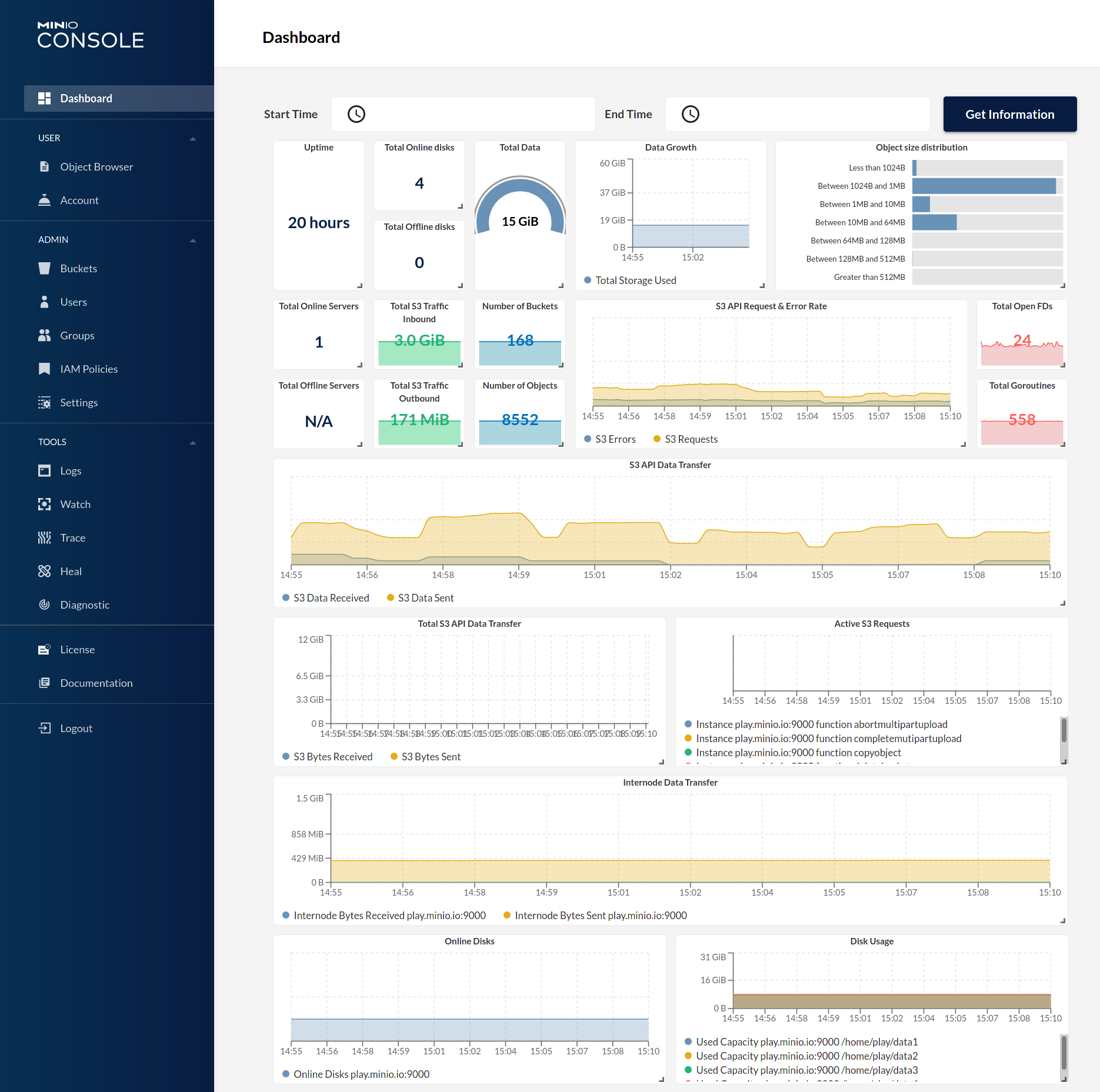 | 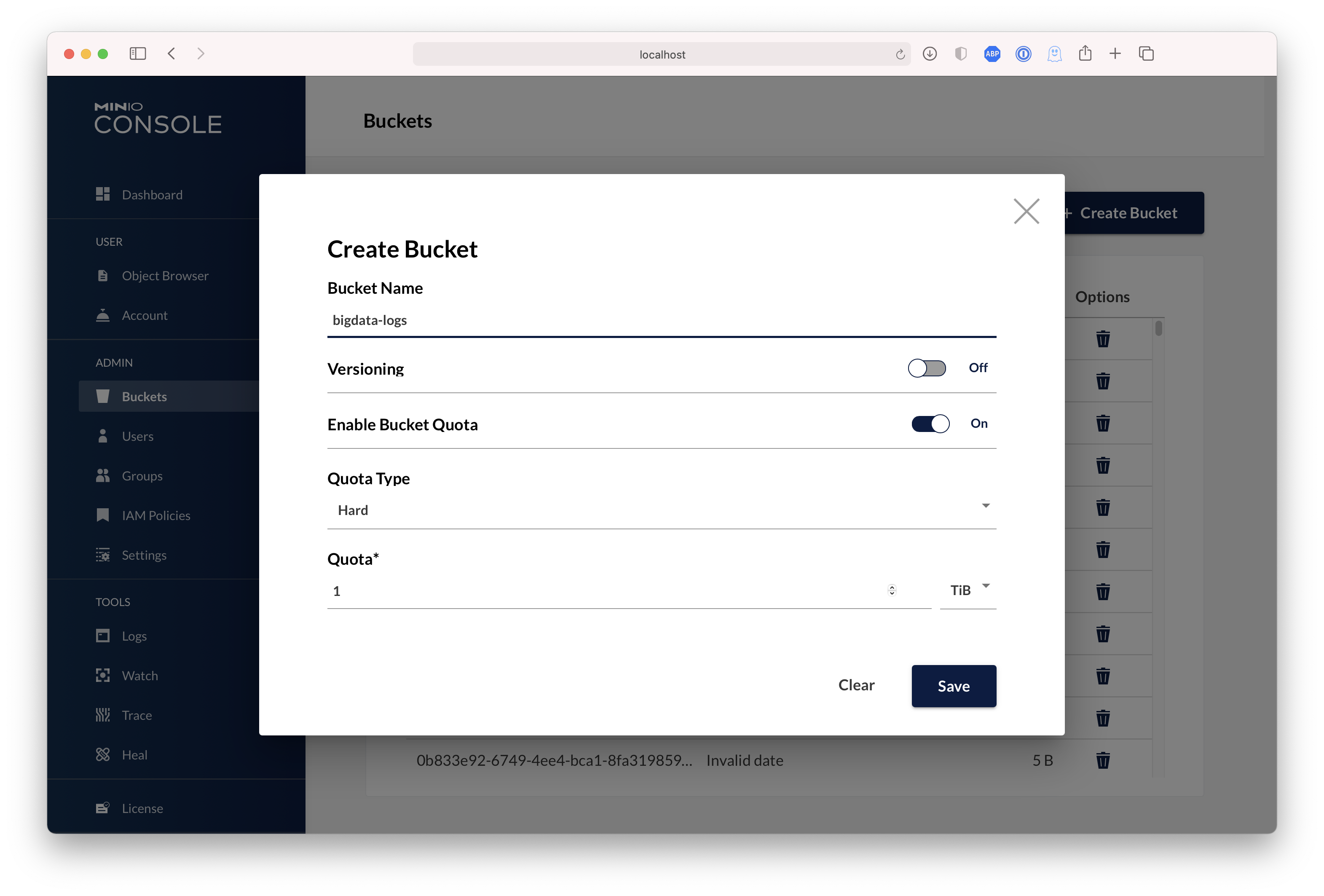 |
|
||||
|
||||
## Test using MinIO Client `mc`
|
||||
`mc` provides a modern alternative to UNIX commands like ls, cat, cp, mirror, diff etc. It supports filesystems and Amazon S3 compatible cloud storage services. Follow the MinIO Client [Quickstart Guide](https://docs.min.io/docs/minio-client-quickstart-guide) for further instructions.
|
||||
|
||||
# Upgrading MinIO
|
||||
MinIO server supports rolling upgrades, i.e. you can update one MinIO instance at a time in a distributed cluster. This allows upgrades with no downtime. Upgrades can be done manually by replacing the binary with the latest release and restarting all servers in a rolling fashion. However, we recommend all our users to use [`mc admin update`](https://docs.min.io/docs/minio-admin-complete-guide.html#update) from the client. This will update all the nodes in the cluster simultaneously and restart them, as shown in the following command from the MinIO client (mc):
|
||||
|
||||
```
|
||||
mc admin update <minio alias, e.g., myminio>
|
||||
```
|
||||
|
||||
> NOTE: some releases might not allow rolling upgrades, this is always called out in the release notes and it is generally advised to read release notes before upgrading. In such a situation `mc admin update` is the recommended upgrading mechanism to upgrade all servers at once.
|
||||
|
||||
## Important things to remember during MinIO upgrades
|
||||
|
||||
- `mc admin update` will only work if the user running MinIO has write access to the parent directory where the binary is located, for example if the current binary is at `/usr/local/bin/minio`, you would need write access to `/usr/local/bin`.
|
||||
- `mc admin update` updates and restarts all servers simultaneously, applications would retry and continue their respective operations upon upgrade.
|
||||
- `mc admin update` is disabled in kubernetes/container environments, container environments provide their own mechanisms to rollout of updates.
|
||||
- In the case of federated setups `mc admin update` should be run against each cluster individually. Avoid updating `mc` to any new releases until all clusters have been successfully updated.
|
||||
- If using `kes` as KMS with MinIO, just replace the binary and restart `kes` more information about `kes` can be found [here](https://github.com/minio/kes/wiki)
|
||||
- If using Vault as KMS with MinIO, ensure you have followed the Vault upgrade procedure outlined here: https://www.vaultproject.io/docs/upgrading/index.html
|
||||
- If using etcd with MinIO for the federation, ensure you have followed the etcd upgrade procedure outlined here: https://github.com/etcd-io/etcd/blob/master/Documentation/upgrades/upgrading-etcd.md
|
||||
|
||||
# Explore Further
|
||||
- [MinIO Erasure Code QuickStart Guide](https://docs.min.io/docs/minio-erasure-code-quickstart-guide)
|
||||
- [Use `mc` with MinIO Server](https://docs.min.io/docs/minio-client-quickstart-guide)
|
||||
- [Use `aws-cli` with MinIO Server](https://docs.min.io/docs/aws-cli-with-minio)
|
||||
- [Use `s3cmd` with MinIO Server](https://docs.min.io/docs/s3cmd-with-minio)
|
||||
- [Use `minio-go` SDK with MinIO Server](https://docs.min.io/docs/golang-client-quickstart-guide)
|
||||
- [The MinIO documentation website](https://docs.min.io)
|
||||
|
||||
# Contribute to MinIO Project
|
||||
Please follow MinIO [Contributor's Guide](https://github.com/minio/minio/blob/master/CONTRIBUTING.md)
|
||||
|
||||
# License
|
||||
Use of MinIO is governed by the GNU AGPLv3 license that can be found in the [LICENSE](https://github.com/minio/minio/blob/master/LICENSE) file.
|
||||
@@ -1,74 +0,0 @@
|
||||
ARG GO_BUILDER
|
||||
ARG MC_IMAGE
|
||||
|
||||
FROM ${GO_BUILDER} AS pins
|
||||
ARG UPSTREAM_RELEASE
|
||||
ARG UPSTREAM_COMMIT
|
||||
ARG MODULE
|
||||
ARG MODULE_VERSION
|
||||
ARG MODULE_SUM
|
||||
ENV GOTOOLCHAIN=local GOFLAGS=-mod=readonly CGO_ENABLED=0 GOOS=linux GOARCH=amd64
|
||||
COPY src /src
|
||||
WORKDIR /src
|
||||
RUN set -eu; \
|
||||
test "$(git rev-parse HEAD)" = "${UPSTREAM_COMMIT}" || { echo "REFUSED pins: src HEAD is not UPSTREAM_COMMIT"; exit 1; }; \
|
||||
test -z "$(git status --porcelain)" || { echo "REFUSED pins: src working tree is not clean"; git status --porcelain; exit 1; }; \
|
||||
test "$(go list -m)" = "${MODULE}" || { echo "REFUSED pins: src module is not MODULE"; exit 1; }; \
|
||||
scratch="$(mktemp -d)"; \
|
||||
(cd "${scratch}" && env -u GOFLAGS go mod download -json "${MODULE}@${MODULE_VERSION}" > "${scratch}/module.json"); \
|
||||
sum="$(sed -n 's/^[[:space:]]*"Sum": "\([^"]*\)".*/\1/p' "${scratch}/module.json")"; \
|
||||
hash="$(sed -n 's/^[[:space:]]*"Hash": "\([^"]*\)".*/\1/p' "${scratch}/module.json")"; \
|
||||
test "${sum}" = "${MODULE_SUM}" || { echo "REFUSED pins: module sum is ${sum}, PINS says MODULE_SUM=${MODULE_SUM}"; exit 1; }; \
|
||||
test "${hash}" = "${UPSTREAM_COMMIT}" || { echo "REFUSED pins: module origin hash is ${hash}, PINS says UPSTREAM_COMMIT=${UPSTREAM_COMMIT}"; exit 1; }; \
|
||||
go mod download; \
|
||||
go mod verify
|
||||
|
||||
FROM pins AS build
|
||||
ARG UPSTREAM_RELEASE
|
||||
ARG UPSTREAM_COMMIT
|
||||
RUN set -eu; \
|
||||
LDFLAGS="$(MINIO_RELEASE=RELEASE go run buildscripts/gen-ldflags.go "${UPSTREAM_RELEASE#RELEASE.}")"; \
|
||||
case "${LDFLAGS}" in *"cmd.ReleaseTag=${UPSTREAM_RELEASE} "*) ;; *) echo "REFUSED build: ldflags lack ReleaseTag=${UPSTREAM_RELEASE}"; exit 1;; esac; \
|
||||
case "${LDFLAGS}" in *"cmd.CommitID=${UPSTREAM_COMMIT} "*) ;; *) echo "REFUSED build: ldflags lack CommitID=${UPSTREAM_COMMIT}"; exit 1;; esac; \
|
||||
mkdir -p /out; \
|
||||
go build -trimpath -tags kqueue -ldflags "${LDFLAGS}" -o /out/minio .; \
|
||||
go version -m /out/minio > /out/buildinfo.txt; \
|
||||
grep -Eq "^[[:space:]]+build[[:space:]]+vcs.revision=${UPSTREAM_COMMIT}$" /out/buildinfo.txt || { echo "REFUSED build: vcs.revision is not UPSTREAM_COMMIT"; exit 1; }; \
|
||||
grep -Eq "^[[:space:]]+build[[:space:]]+vcs.modified=false$" /out/buildinfo.txt || { echo "REFUSED build: vcs.modified is not false"; exit 1; }; \
|
||||
grep -Eq "^[[:space:]]+build[[:space:]]+-trimpath=true$" /out/buildinfo.txt || { echo "REFUSED build: -trimpath is not true"; exit 1; }; \
|
||||
grep -Eq "^[[:space:]]+build[[:space:]]+CGO_ENABLED=0$" /out/buildinfo.txt || { echo "REFUSED build: CGO_ENABLED is not 0"; exit 1; }; \
|
||||
grep -Eq "^[[:space:]]+build[[:space:]]+-tags=kqueue$" /out/buildinfo.txt || { echo "REFUSED build: -tags is not kqueue"; exit 1; }; \
|
||||
cat /out/buildinfo.txt; \
|
||||
sha256sum /out/minio | cut -d' ' -f1 > /out/minio.sha256; \
|
||||
mkdir -p /rootfs/tmp /rootfs/etc; \
|
||||
chmod 1777 /rootfs/tmp; \
|
||||
printf 'root:x:0:0:root:/root:/sbin/nologin\n' > /rootfs/etc/passwd; \
|
||||
printf 'root:x:0:\n' > /rootfs/etc/group
|
||||
|
||||
FROM ${MC_IMAGE} AS mc
|
||||
|
||||
FROM scratch
|
||||
ARG UPSTREAM_RELEASE
|
||||
ARG UPSTREAM_COMMIT
|
||||
ARG RECIPE_COMMIT
|
||||
ARG BINARY_SHA256
|
||||
LABEL org.opencontainers.image.source="https://git.vezha.io/para/minio" \
|
||||
org.opencontainers.image.revision="${UPSTREAM_COMMIT}" \
|
||||
org.opencontainers.image.version="${UPSTREAM_RELEASE}" \
|
||||
org.opencontainers.image.licenses="AGPL-3.0" \
|
||||
io.vezha.recipe="${RECIPE_COMMIT}" \
|
||||
io.vezha.binary.sha256="${BINARY_SHA256}"
|
||||
ENV PATH=/usr/bin MC_CONFIG_DIR=/tmp/.mc
|
||||
COPY --from=build /rootfs/ /
|
||||
COPY --from=build /out/minio /usr/bin/minio
|
||||
COPY --from=mc /usr/bin/mc /usr/bin/mc
|
||||
COPY --from=build /etc/ssl/certs/ca-certificates.crt /etc/ssl/certs/ca-certificates.crt
|
||||
COPY --from=mc /licenses/ /licenses/mc/
|
||||
COPY src/LICENSE /licenses/LICENSE
|
||||
COPY src/CREDITS /licenses/CREDITS
|
||||
COPY vezha/SOURCE /licenses/SOURCE
|
||||
EXPOSE 9000
|
||||
VOLUME ["/data"]
|
||||
ENTRYPOINT ["/usr/bin/minio"]
|
||||
CMD ["server", "/data"]
|
||||
HEALTHCHECK --interval=5s --timeout=5s --retries=10 CMD ["/usr/bin/mc", "ready", "local"]
|
||||
@@ -1,7 +0,0 @@
|
||||
UPSTREAM_RELEASE=RELEASE.2025-09-07T16-13-09Z
|
||||
UPSTREAM_COMMIT=07c3a429bfed433e49018cb0f78a52145d4bedeb
|
||||
MODULE=github.com/minio/minio
|
||||
MODULE_VERSION=v0.0.0-20250907161309-07c3a429bfed
|
||||
MODULE_SUM=h1:deu0m9BiyqnMbGWfJi1PpVyotSXlDnTmRIme1cUXnxo=
|
||||
GO_BUILDER=golang:1.27.2-trixie@sha256:47667934874913a449b96faa7ef4777fa285d9ec29126ee80ed61c45b7cccf0e
|
||||
MC_IMAGE=git.vezha.io/para/minio-mc@sha256:eb4ea9884b77704230e2423e9004d2fa738dc272876b9cc41a297d29443b8780
|
||||
@@ -1,37 +0,0 @@
|
||||
# vezha build recipe for minio/minio
|
||||
|
||||
This branch builds the container image `git.vezha.io/para/minio` from the unmodified upstream source of minio/minio, which is archived upstream and no longer publishes images.
|
||||
The repository is an imported copy of minio/minio with all its tags. The `vezha` branch is an orphan branch that holds only the recipe.
|
||||
|
||||
## Licence and source offer (AGPL-3.0)
|
||||
|
||||
The image ships the unmodified minio binary and the unmodified mc binary (copied from `git.vezha.io/para/minio-mc`, pinned in `PINS` as `MC_IMAGE`), both licensed under the GNU Affero General Public License v3.
|
||||
The complete corresponding source of minio is the tag named in `PINS` (`UPSTREAM_RELEASE`) in this public repository:
|
||||
`https://git.vezha.io/para/minio/src/tag/<UPSTREAM_RELEASE>`.
|
||||
Each image carries `/licenses/LICENSE`, `/licenses/CREDITS` and `/licenses/SOURCE`, and the mc licence files and source offer under `/licenses/mc/`.
|
||||
`SOURCE` names the upstream URL, the release and commit, the tag URL, the recipe commit, the builder image digest, the Go module version and sum, and the sha256 of the binary.
|
||||
Nothing in this recipe patches the upstream source. A patch would make the binary a modified version and would need its own source offer.
|
||||
|
||||
## Files
|
||||
|
||||
- `PINS`: every pinned input. Builds refuse a missing, empty, duplicated or unknown key.
|
||||
- `Dockerfile`: stages `pins`, `build`, `mc` and the final scratch image; no BuildKit-only syntax.
|
||||
- `gates.sh`, `check-image.sh`, `smoke.sh`: the checks the workflow runs; `SOURCE.tmpl` is rendered into `/licenses/SOURCE`.
|
||||
- `.gitea/workflows/release.yml`: verify on every push, publish on `vezha`.
|
||||
|
||||
## Image notes
|
||||
|
||||
The image is `FROM scratch`: the minio and mc binaries, the CA bundle, a root-only passwd and group, a world-writable `/tmp`, and the licence files.
|
||||
It runs as root because the production data volume is root-owned; changing the user would break existing data.
|
||||
It has `HEALTHCHECK ["/usr/bin/mc","ready","local"]`, `ENV PATH=/usr/bin` and `ENV MC_CONFIG_DIR=/tmp/.mc`, `ENTRYPOINT ["/usr/bin/minio"]`, `CMD ["server","/data"]`, `VOLUME /data` and `EXPOSE 9000`.
|
||||
The upstream `docker-entrypoint.sh` and its `*_FILE` environment defaults (`MINIO_ROOT_USER_FILE`, `MINIO_ROOT_PASSWORD_FILE`, `MINIO_ACCESS_KEY_FILE`, `MINIO_SECRET_KEY_FILE`, `MINIO_KMS_SECRET_KEY_FILE`, `MINIO_CONFIG_ENV_FILE`) and the user switch variables are not carried: credentials are passed as `MINIO_ROOT_USER` and `MINIO_ROOT_PASSWORD`.
|
||||
|
||||
## Release procedure
|
||||
|
||||
A run on a branch other than `vezha` builds and verifies only and reads no secret. A run on `vezha` also publishes `git.vezha.io/para/minio:<tag>`, where the tag is `<lowercased UPSTREAM_RELEASE>-<first 12 of UPSTREAM_COMMIT>-r<first 8 of the recipe commit>`.
|
||||
Tags are write-once, there is no `latest`, and consumers pin by digest. A run on `vezha` refuses an `MC_IMAGE` that is not a `git.vezha.io/para/minio-mc` digest published by the mc recipe. The run prints one line per image:
|
||||
|
||||
`PUBLISHED git.vezha.io/para/minio@sha256:<digest> tag=<tag> binary-sha256=<sha256>`
|
||||
|
||||
To bump a pin, edit `PINS` on a branch, let the verify run go green, and fast-forward `vezha`; the new commit publishes a new tag.
|
||||
The publish step needs the repository secret `REGISTRY_TOKEN` (a Gitea token with the `write:package` scope) and optionally `REGISTRY_USER`.
|
||||
@@ -1,24 +0,0 @@
|
||||
This image ships MinIO, licensed under the GNU Affero General Public License v3 (AGPL-3.0), unmodified.
|
||||
It also ships mc (the MinIO Client, AGPL-3.0, unmodified) at /usr/bin/mc; its licence files and source offer are under /licenses/mc/.
|
||||
|
||||
Upstream project: https://github.com/minio/minio
|
||||
Upstream release: @UPSTREAM_RELEASE@
|
||||
Upstream commit: @UPSTREAM_COMMIT@
|
||||
|
||||
Corresponding source at that commit, tagged in this repository:
|
||||
https://git.vezha.io/para/minio/src/tag/@UPSTREAM_RELEASE@
|
||||
Source archive of that tag:
|
||||
https://git.vezha.io/para/minio/archive/@UPSTREAM_RELEASE@.tar.gz
|
||||
|
||||
Build recipe repository: https://git.vezha.io/para/minio
|
||||
Build recipe commit: @RECIPE_COMMIT@
|
||||
Build recipe at that commit:
|
||||
https://git.vezha.io/para/minio/src/commit/@RECIPE_COMMIT@
|
||||
|
||||
Go builder image: @GO_BUILDER@
|
||||
Go module: @MODULE@ @MODULE_VERSION@
|
||||
Go module sum: @MODULE_SUM@
|
||||
Binary sha256 of /usr/bin/minio: @BINARY_SHA256@
|
||||
|
||||
mc image copied into this image: @MC_IMAGE@
|
||||
The CA bundle /etc/ssl/certs/ca-certificates.crt is copied unmodified from the Go builder image (Debian ca-certificates; source: https://tracker.debian.org/pkg/ca-certificates).
|
||||
@@ -1,138 +0,0 @@
|
||||
#!/bin/sh
|
||||
set -eu
|
||||
|
||||
kind=${1:?usage: check-image.sh <mc|minio> <image>}
|
||||
image=${2:?usage: check-image.sh <mc|minio> <image>}
|
||||
REGISTRY=git.vezha.io
|
||||
OWNER=para
|
||||
STOPGAP_MC_DIGEST=sha256:eb4ea9884b77704230e2423e9004d2fa738dc272876b9cc41a297d29443b8780
|
||||
|
||||
fail() {
|
||||
printf 'REFUSED image: %s\n' "$1" >&2
|
||||
exit 1
|
||||
}
|
||||
|
||||
for v in UPSTREAM_RELEASE UPSTREAM_COMMIT RECIPE_COMMIT BINARY_SHA256 GO_BUILDER MODULE_VERSION MODULE_SUM; do
|
||||
eval "val=\${$v:-}"
|
||||
[ -n "$val" ] || fail "environment variable $v is empty"
|
||||
done
|
||||
|
||||
tmp=$(mktemp -d)
|
||||
cid=""
|
||||
cleanup() {
|
||||
if [ -n "$cid" ]; then
|
||||
docker rm -f "$cid" > /dev/null 2>&1 || true
|
||||
fi
|
||||
rm -rf "$tmp"
|
||||
}
|
||||
trap cleanup EXIT
|
||||
|
||||
cid=$(docker create "$image")
|
||||
docker export "$cid" > "$tmp/fs.tar"
|
||||
tar -tvf "$tmp/fs.tar" | sed 's| link to .*||; s| -> .*||' > "$tmp/list.txt"
|
||||
docker inspect "$cid" > "$tmp/inspect.json"
|
||||
|
||||
mode_of() {
|
||||
awk -v p="$1" '{ n = $NF; sub(/^\.\//, "", n); sub(/\/$/, "", n); if (n == p) { print $1; exit } }' "$tmp/list.txt"
|
||||
}
|
||||
|
||||
need_file() {
|
||||
m=$(mode_of "$1")
|
||||
[ -n "$m" ] || fail "$image has no /$1"
|
||||
echo "image: /$1 present ($m)"
|
||||
}
|
||||
|
||||
member() {
|
||||
tar -xOf "$tmp/fs.tar" "$1" 2> /dev/null || tar -xOf "$tmp/fs.tar" "./$1"
|
||||
}
|
||||
|
||||
cfg() {
|
||||
jq -r "$1" "$tmp/inspect.json"
|
||||
}
|
||||
|
||||
bin=$kind
|
||||
need_file "usr/bin/$bin"
|
||||
need_file etc/ssl/certs/ca-certificates.crt
|
||||
need_file licenses/LICENSE
|
||||
need_file licenses/CREDITS
|
||||
need_file licenses/SOURCE
|
||||
case $kind in
|
||||
mc)
|
||||
need_file bin/sh
|
||||
;;
|
||||
minio)
|
||||
need_file usr/bin/mc
|
||||
need_file etc/passwd
|
||||
need_file etc/group
|
||||
need_file licenses/mc/LICENSE
|
||||
need_file licenses/mc/CREDITS
|
||||
if [ "${MC_IMAGE:-}" != "$REGISTRY/$OWNER/minio-mc@$STOPGAP_MC_DIGEST" ]; then
|
||||
need_file licenses/mc/SOURCE
|
||||
fi
|
||||
[ "$(mode_of tmp)" = drwxrwxrwt ] || fail "/tmp of $image is not mode 1777"
|
||||
;;
|
||||
esac
|
||||
|
||||
want_label() {
|
||||
got=$(cfg ".[0].Config.Labels[\"$1\"] // \"\"")
|
||||
[ "$got" = "$2" ] || fail "label $1 is '$got', expected '$2'"
|
||||
echo "image: label $1 = $got"
|
||||
}
|
||||
want_label org.opencontainers.image.source "https://$REGISTRY/$OWNER/$kind"
|
||||
want_label org.opencontainers.image.revision "$UPSTREAM_COMMIT"
|
||||
want_label org.opencontainers.image.version "$UPSTREAM_RELEASE"
|
||||
want_label org.opencontainers.image.licenses AGPL-3.0
|
||||
want_label io.vezha.recipe "$RECIPE_COMMIT"
|
||||
want_label io.vezha.binary.sha256 "$BINARY_SHA256"
|
||||
|
||||
want_cfg() {
|
||||
got=$(cfg "$1")
|
||||
[ "$got" = "$2" ] || fail "$3 is '$got', expected '$2'"
|
||||
echo "image: $3 = $got"
|
||||
}
|
||||
user=$(cfg '.[0].Config.User // ""')
|
||||
case $user in
|
||||
"" | root | 0) echo "image: runs as root" ;;
|
||||
*) fail "the image runs as user '$user', expected root" ;;
|
||||
esac
|
||||
case $kind in
|
||||
mc)
|
||||
want_cfg '.[0].Config.Entrypoint | tostring' '["mc"]' Entrypoint
|
||||
want_cfg '.[0].Config.Cmd | tostring' 'null' Cmd
|
||||
want_cfg '.[0].Config.Healthcheck | tostring' 'null' Healthcheck
|
||||
;;
|
||||
minio)
|
||||
want_cfg '.[0].Config.Entrypoint | tostring' '["/usr/bin/minio"]' Entrypoint
|
||||
want_cfg '.[0].Config.Cmd | tostring' '["server","/data"]' Cmd
|
||||
want_cfg '.[0].Config.Volumes | keys | tostring' '["/data"]' Volumes
|
||||
want_cfg '.[0].Config.ExposedPorts | keys | tostring' '["9000/tcp"]' ExposedPorts
|
||||
want_cfg '.[0].Config.Healthcheck.Test | tostring' '["CMD","/usr/bin/mc","ready","local"]' Healthcheck
|
||||
want_cfg '[.[0].Config.Env[] | select(. == "MC_CONFIG_DIR=/tmp/.mc")] | length' 1 MC_CONFIG_DIR
|
||||
want_cfg '[.[0].Config.Env[] | select(. == "PATH=/usr/bin")] | length' 1 PATH
|
||||
;;
|
||||
esac
|
||||
|
||||
got=$(member "usr/bin/$bin" | sha256sum | cut -d' ' -f1)
|
||||
[ "$got" = "$BINARY_SHA256" ] || fail "/usr/bin/$bin has sha256 $got, expected $BINARY_SHA256"
|
||||
echo "image: /usr/bin/$bin sha256 $got"
|
||||
|
||||
member licenses/LICENSE | cmp -s - src/LICENSE || fail "/licenses/LICENSE differs from src/LICENSE"
|
||||
member licenses/CREDITS | cmp -s - src/CREDITS || fail "/licenses/CREDITS differs from src/CREDITS"
|
||||
member licenses/SOURCE > "$tmp/SOURCE"
|
||||
for needle in \
|
||||
"https://github.com/minio/$kind" \
|
||||
"$UPSTREAM_RELEASE" \
|
||||
"$UPSTREAM_COMMIT" \
|
||||
"https://$REGISTRY/$OWNER/$kind/src/tag/$UPSTREAM_RELEASE" \
|
||||
"https://$REGISTRY/$OWNER/$kind/archive/$UPSTREAM_RELEASE.tar.gz" \
|
||||
"https://$REGISTRY/$OWNER/$kind/src/commit/$RECIPE_COMMIT" \
|
||||
"$GO_BUILDER" \
|
||||
"$MODULE_VERSION" \
|
||||
"$MODULE_SUM" \
|
||||
"$BINARY_SHA256"; do
|
||||
grep -qF "$needle" "$tmp/SOURCE" || fail "/licenses/SOURCE does not name $needle"
|
||||
done
|
||||
echo "image: /licenses/SOURCE names the upstream, the tag, the recipe, the builder, the module and the binary"
|
||||
|
||||
[ -f .dockerignore ] || fail "no .dockerignore at the repository root"
|
||||
echo "image: all checks passed for $image"
|
||||
-426
@@ -1,426 +0,0 @@
|
||||
#!/bin/sh
|
||||
set -eu
|
||||
|
||||
REGISTRY=git.vezha.io
|
||||
OWNER=para
|
||||
STOPGAP_SERVER_TAG=release.2025-09-07t16-13-09z
|
||||
STOPGAP_SERVER_DIGEST=sha256:a1a8bd4ac40ad7881a245bab97323e18f971e4d4cba2c2007ec1bedd21cbaba2
|
||||
STOPGAP_MC_TAG=release.2025-08-13t08-35-41z
|
||||
STOPGAP_MC_DIGEST=sha256:eb4ea9884b77704230e2423e9004d2fa738dc272876b9cc41a297d29443b8780
|
||||
TAG_RE='^release\.[0-9]{4}-[0-9]{2}-[0-9]{2}t[0-9]{2}-[0-9]{2}-[0-9]{2}z-[0-9a-f]{12}-r[0-9a-f]{8}$'
|
||||
ACCEPT='application/vnd.oci.image.index.v1+json, application/vnd.oci.image.manifest.v1+json, application/vnd.docker.distribution.manifest.v2+json, application/vnd.docker.distribution.manifest.list.v2+json'
|
||||
GUARD="if: github.ref == 'refs/heads/vezha'"
|
||||
SELF=$0
|
||||
|
||||
refuse() {
|
||||
printf 'REFUSED %s: %s\n' "$1" "$2" >&2
|
||||
exit 1
|
||||
}
|
||||
|
||||
pin_value() {
|
||||
sed -n "s/^$1=//p" "$2"
|
||||
}
|
||||
|
||||
anon_head() {
|
||||
token=$(curl -fsS "https://$REGISTRY/v2/token?service=container_registry&scope=repository:$OWNER/$1:pull" | jq -r .token) || return 1
|
||||
curl -sS -o /dev/null -D - -H "Authorization: Bearer $token" -H "Accept: $ACCEPT" "https://$REGISTRY/v2/$OWNER/$1/manifests/$2" \
|
||||
| tr -d '\r' | awk '/^HTTP/ { s = $2 } tolower($1) == "docker-content-digest:" { d = $2 } END { print s, d }'
|
||||
}
|
||||
|
||||
fetch_ok() {
|
||||
i=0
|
||||
code=none
|
||||
while [ "$i" -lt 3 ]; do
|
||||
code=$(curl -sS -o /dev/null -L -m 900 -w '%{http_code}' "$1" || true)
|
||||
if [ "$code" = 200 ]; then
|
||||
return 0
|
||||
fi
|
||||
i=$((i + 1))
|
||||
sleep 5
|
||||
done
|
||||
echo "$1 answered $code" >&2
|
||||
return 1
|
||||
}
|
||||
|
||||
cmd_pins() {
|
||||
kind=$1
|
||||
file=${2:-vezha/PINS}
|
||||
case $kind in
|
||||
mc) last=BASE_IMAGE ;;
|
||||
minio) last=MC_IMAGE ;;
|
||||
*) refuse pins "unknown kind $kind" ;;
|
||||
esac
|
||||
keys="UPSTREAM_RELEASE UPSTREAM_COMMIT MODULE MODULE_VERSION MODULE_SUM GO_BUILDER $last"
|
||||
[ -f "$file" ] || refuse pins "$file is missing"
|
||||
n=0
|
||||
while IFS= read -r line || [ -n "$line" ]; do
|
||||
n=$((n + 1))
|
||||
if printf '%s' "$line" | grep -q '[[:space:]"'"'"']'; then
|
||||
refuse pins "line $n contains a space or a quote"
|
||||
fi
|
||||
printf '%s' "$line" | grep -Eq '^[A-Z_]+=' || refuse pins "line $n is not KEY=VALUE"
|
||||
k=${line%%=*}
|
||||
known=0
|
||||
for x in $keys; do
|
||||
if [ "$x" = "$k" ]; then
|
||||
known=1
|
||||
fi
|
||||
done
|
||||
[ "$known" = 1 ] || refuse pins "unknown key $k"
|
||||
done < "$file"
|
||||
for k in $keys; do
|
||||
c=$(grep -c "^$k=" "$file" || true)
|
||||
[ "$c" -ge 1 ] || refuse pins "missing key $k"
|
||||
[ "$c" -le 1 ] || refuse pins "duplicate key $k"
|
||||
[ -n "$(pin_value "$k" "$file")" ] || refuse pins "empty value for key $k"
|
||||
done
|
||||
shape() {
|
||||
printf '%s' "$(pin_value "$1" "$file")" | grep -Eq "$2" || refuse pins "key $1 has an unexpected form"
|
||||
}
|
||||
shape UPSTREAM_RELEASE '^RELEASE\.[0-9]{4}-[0-9]{2}-[0-9]{2}T[0-9]{2}-[0-9]{2}-[0-9]{2}Z$'
|
||||
shape UPSTREAM_COMMIT '^[0-9a-f]{40}$'
|
||||
shape MODULE "^github\\.com/minio/$kind\$"
|
||||
shape MODULE_VERSION '^v0\.0\.0-[0-9]{14}-[0-9a-f]{12}$'
|
||||
shape MODULE_SUM '^h1:[A-Za-z0-9+/]{43}=$'
|
||||
for k in $keys; do
|
||||
printf '%s=%s\n' "$k" "$(pin_value "$k" "$file")"
|
||||
done
|
||||
}
|
||||
|
||||
wf_lint() {
|
||||
f=$1
|
||||
if grep -q 'pull_request' "$f"; then
|
||||
refuse refs "the workflow has a pull_request trigger"
|
||||
fi
|
||||
if grep -n 'latest' "$f" | grep -v 'ubuntu-latest'; then
|
||||
refuse refs "the workflow mentions latest (lines above)"
|
||||
fi
|
||||
grep -q '^ contents: read$' "$f" || refuse refs "permissions contents: read is missing"
|
||||
awk -v g="$GUARD" '
|
||||
function flush() {
|
||||
if (name == "") return
|
||||
if (secret) secretsteps++
|
||||
if ((risky || secret) && !guarded) {
|
||||
printf "REFUSED refs: step \"%s\" can push or read a secret and has no vezha-ref guard\n", name > "/dev/stderr"
|
||||
bad = 1
|
||||
}
|
||||
}
|
||||
/^ - name: / { flush(); name = $0; sub(/^ - name: /, "", name); risky = 0; secret = 0; guarded = 0 }
|
||||
/docker login|docker push|oras push/ { risky = 1 }
|
||||
/secrets\./ { secret = 1 }
|
||||
index($0, g) { guarded = 1 }
|
||||
END {
|
||||
flush()
|
||||
if (secretsteps != 1) {
|
||||
printf "REFUSED refs: secrets. appears in %d steps, expected exactly 1\n", secretsteps > "/dev/stderr"
|
||||
bad = 1
|
||||
}
|
||||
exit bad
|
||||
}
|
||||
' "$f" || exit 1
|
||||
}
|
||||
|
||||
cmd_wf_lint() {
|
||||
wf_lint "${1:-.gitea/workflows/release.yml}"
|
||||
}
|
||||
|
||||
cmd_refs() {
|
||||
kind=$1
|
||||
df=vezha/Dockerfile
|
||||
pins=vezha/PINS
|
||||
case $kind in
|
||||
mc) last=BASE_IMAGE ;;
|
||||
minio) last=MC_IMAGE ;;
|
||||
*) refuse refs "unknown kind $kind" ;;
|
||||
esac
|
||||
if grep -nE '^ARG[[:space:]]+[A-Za-z_][A-Za-z0-9_]*=' "$df"; then
|
||||
refuse refs "a Dockerfile ARG has a default (lines above)"
|
||||
fi
|
||||
for k in GO_BUILDER $last; do
|
||||
printf '%s' "$(pin_value "$k" "$pins")" | grep -Eq '^[^@[:space:]]+@sha256:[0-9a-f]{64}$' || refuse refs "$k is not pinned by @sha256 digest"
|
||||
done
|
||||
if [ "$kind" = minio ]; then
|
||||
printf '%s' "$(pin_value MC_IMAGE "$pins")" | grep -Eq "^$REGISTRY/$OWNER/minio-mc@sha256:[0-9a-f]{64}\$" || refuse refs "MC_IMAGE is not $REGISTRY/$OWNER/minio-mc@sha256:<digest>"
|
||||
fi
|
||||
stages=""
|
||||
while IFS= read -r line; do
|
||||
case $line in
|
||||
FROM\ *) ;;
|
||||
*) continue ;;
|
||||
esac
|
||||
# shellcheck disable=SC2086
|
||||
set -- $line
|
||||
shift
|
||||
case $1 in --*) refuse refs "FROM option $1 is not allowed" ;; esac
|
||||
img=$1
|
||||
case $img in
|
||||
scratch) ;;
|
||||
'${GO_BUILDER}' | '${BASE_IMAGE}' | '${MC_IMAGE}')
|
||||
var=${img#\$\{}
|
||||
var=${var%\}}
|
||||
[ "$var" = GO_BUILDER ] || [ "$var" = "$last" ] || refuse refs "FROM uses $var which is not a pinned image key of this repo"
|
||||
;;
|
||||
*@sha256:*)
|
||||
printf '%s' "$img" | grep -Eq '@sha256:[0-9a-f]{64}$' || refuse refs "FROM $img has a malformed digest"
|
||||
;;
|
||||
*)
|
||||
found=0
|
||||
for s in $stages; do
|
||||
if [ "$s" = "$img" ]; then
|
||||
found=1
|
||||
fi
|
||||
done
|
||||
[ "$found" = 1 ] || refuse refs "FROM $img is not pinned by digest"
|
||||
;;
|
||||
esac
|
||||
if [ "${2:-}" = AS ]; then
|
||||
stages="$stages $3"
|
||||
fi
|
||||
done < "$df"
|
||||
for f in $(grep -oE '^COPY[[:space:]]+--from=[^[:space:]]+' "$df" | sed 's/.*--from=//'); do
|
||||
case $f in
|
||||
*'$'*) refuse refs "COPY --from=$f takes a variable" ;;
|
||||
esac
|
||||
found=0
|
||||
for s in $stages; do
|
||||
if [ "$s" = "$f" ]; then
|
||||
found=1
|
||||
fi
|
||||
done
|
||||
[ "$found" = 1 ] || refuse refs "COPY --from=$f is not a stage of this Dockerfile"
|
||||
done
|
||||
wf_lint .gitea/workflows/release.yml
|
||||
}
|
||||
|
||||
cmd_provenance_remote() {
|
||||
: "${GITHUB_REPOSITORY:?}" "${UPSTREAM_RELEASE:?}" "${UPSTREAM_COMMIT:?}"
|
||||
body=$(curl -fsS "https://$REGISTRY/api/v1/repos/$GITHUB_REPOSITORY") || refuse provenance "anonymous GET of the repository failed"
|
||||
[ "$(printf '%s' "$body" | jq -r .private)" = false ] || refuse provenance "the repository is not public"
|
||||
[ "$(printf '%s' "$body" | jq -r .has_actions)" = true ] || refuse provenance "the repository has no actions"
|
||||
[ "$(printf '%s' "$body" | jq -r .default_branch)" = vezha ] || refuse provenance "the default branch is not vezha"
|
||||
got=$(GIT_TERMINAL_PROMPT=0 git ls-remote "https://$REGISTRY/$GITHUB_REPOSITORY" "refs/tags/${UPSTREAM_RELEASE}^{}" | cut -f1)
|
||||
[ "$got" = "$UPSTREAM_COMMIT" ] || refuse provenance "tag $UPSTREAM_RELEASE resolves to '$got' but PINS says UPSTREAM_COMMIT=$UPSTREAM_COMMIT"
|
||||
echo "provenance: tag $UPSTREAM_RELEASE resolves to $got"
|
||||
}
|
||||
|
||||
cmd_provenance_src() {
|
||||
: "${UPSTREAM_COMMIT:?}"
|
||||
head=$(git -C src rev-parse HEAD)
|
||||
[ "$head" = "$UPSTREAM_COMMIT" ] || refuse provenance "src HEAD is $head but PINS says UPSTREAM_COMMIT=$UPSTREAM_COMMIT"
|
||||
echo "provenance: src HEAD is $head"
|
||||
}
|
||||
|
||||
cmd_source_urls() {
|
||||
: "${GITHUB_REPOSITORY:?}" "${UPSTREAM_RELEASE:?}"
|
||||
for u in "https://$REGISTRY/$GITHUB_REPOSITORY/src/tag/$UPSTREAM_RELEASE" "https://$REGISTRY/$GITHUB_REPOSITORY/archive/$UPSTREAM_RELEASE.tar.gz"; do
|
||||
fetch_ok "$u" || refuse source-urls "anonymous fetch of $u failed"
|
||||
echo "source-urls: $u -> 200"
|
||||
done
|
||||
}
|
||||
|
||||
cmd_make_tag() {
|
||||
: "${UPSTREAM_RELEASE:?}" "${UPSTREAM_COMMIT:?}" "${GITHUB_SHA:?}"
|
||||
lower=$(printf '%s' "$UPSTREAM_RELEASE" | tr 'A-Z' 'a-z')
|
||||
printf '%s-%s-r%s\n' "$lower" "$(printf '%s' "$UPSTREAM_COMMIT" | cut -c1-12)" "$(printf '%s' "$GITHUB_SHA" | cut -c1-8)"
|
||||
}
|
||||
|
||||
cmd_tag() {
|
||||
pkg=$1
|
||||
tag=$2
|
||||
case $tag in
|
||||
"$STOPGAP_SERVER_TAG" | "$STOPGAP_MC_TAG") refuse tag "$tag is a stopgap tag and is never written" ;;
|
||||
esac
|
||||
printf '%s' "$tag" | grep -Eq "$TAG_RE" || refuse tag "$tag does not have the immutable tag form"
|
||||
r=$(anon_head "$pkg" "$tag") || refuse tag "the anonymous registry token request failed"
|
||||
case ${r%% *} in
|
||||
404) echo "tag: $pkg:$tag does not exist yet" ;;
|
||||
200) refuse tag "$pkg:$tag already exists, tags are write-once" ;;
|
||||
*) refuse tag "the registry answered ${r%% *} for $pkg:$tag" ;;
|
||||
esac
|
||||
}
|
||||
|
||||
cmd_digest() {
|
||||
r=$(anon_head "$1" "$2") || refuse digest "the anonymous registry token request failed"
|
||||
[ "${r%% *}" = 200 ] || refuse digest "the registry answered ${r%% *} for $1:$2"
|
||||
printf '%s\n' "${r#* }"
|
||||
}
|
||||
|
||||
cmd_stopgap() {
|
||||
s=$(anon_head minio "$STOPGAP_SERVER_TAG") || refuse stopgap "the anonymous registry token request failed"
|
||||
m=$(anon_head minio-mc "$STOPGAP_MC_TAG") || refuse stopgap "the anonymous registry token request failed"
|
||||
[ "${s#* }" = "$STOPGAP_SERVER_DIGEST" ] || refuse stopgap "minio:$STOPGAP_SERVER_TAG resolves to '${s#* }'"
|
||||
[ "${m#* }" = "$STOPGAP_MC_DIGEST" ] || refuse stopgap "minio-mc:$STOPGAP_MC_TAG resolves to '${m#* }'"
|
||||
echo "minio:$STOPGAP_SERVER_TAG ${s#* }"
|
||||
echo "minio-mc:$STOPGAP_MC_TAG ${m#* }"
|
||||
}
|
||||
|
||||
cmd_preflight() {
|
||||
kind=$1
|
||||
ref=$2
|
||||
mc_image=${3:-}
|
||||
[ "$kind" = minio ] || return 0
|
||||
[ "$ref" = refs/heads/vezha ] || return 0
|
||||
printf '%s' "$mc_image" | grep -Eq "^$REGISTRY/$OWNER/minio-mc@sha256:[0-9a-f]{64}\$" || refuse preflight "MC_IMAGE '$mc_image' is not $REGISTRY/$OWNER/minio-mc@sha256:<digest>"
|
||||
[ "$mc_image" != "$REGISTRY/$OWNER/minio-mc@$STOPGAP_MC_DIGEST" ] || refuse preflight "MC_IMAGE is the stopgap digest, which is never published from vezha"
|
||||
}
|
||||
|
||||
cmd_login_guard() {
|
||||
[ -n "${REGISTRY_TOKEN:-}" ] || {
|
||||
echo "::error::REGISTRY_TOKEN secret is not set. Create a Gitea PAT with write:package scope and add it under repo Settings, Actions, Secrets."
|
||||
refuse login-guard "REGISTRY_TOKEN is not set"
|
||||
}
|
||||
}
|
||||
|
||||
cmd_put_denied() {
|
||||
[ "$1" -ne 0 ] || refuse put-denied "the read-only user's PUT succeeded"
|
||||
grep -Eqi 'access denied|insufficient permissions' "$2" || refuse put-denied "the PUT failed but not with Access Denied"
|
||||
}
|
||||
|
||||
cmd_prove() {
|
||||
ref=$1
|
||||
bin=$2
|
||||
want=$3
|
||||
docker pull "$ref" > /dev/null || refuse prove "pull of $ref failed"
|
||||
cid=$(docker create "$ref") || refuse prove "docker create of $ref failed"
|
||||
tmp=$(mktemp -d)
|
||||
if ! docker cp "$cid:/usr/bin/$bin" "$tmp/$bin" > /dev/null; then
|
||||
docker rm -f "$cid" > /dev/null
|
||||
refuse prove "no /usr/bin/$bin in $ref"
|
||||
fi
|
||||
label=$(docker inspect -f '{{index .Config.Labels "io.vezha.binary.sha256"}}' "$cid")
|
||||
docker rm -f "$cid" > /dev/null
|
||||
got=$(sha256sum "$tmp/$bin" | cut -d' ' -f1)
|
||||
rm -rf "$tmp"
|
||||
[ "$got" = "$want" ] || refuse prove "/usr/bin/$bin in $ref has sha256 $got, expected $want"
|
||||
[ "$label" = "$want" ] || refuse prove "label io.vezha.binary.sha256 of $ref is '$label', expected $want"
|
||||
echo "prove: $ref carries /usr/bin/$bin with sha256 $got"
|
||||
}
|
||||
|
||||
cmd_render_source() {
|
||||
tmpl=$1
|
||||
out=$2
|
||||
sed \
|
||||
-e "s|@UPSTREAM_RELEASE@|$UPSTREAM_RELEASE|g" \
|
||||
-e "s|@UPSTREAM_COMMIT@|$UPSTREAM_COMMIT|g" \
|
||||
-e "s|@RECIPE_COMMIT@|$GITHUB_SHA|g" \
|
||||
-e "s|@GO_BUILDER@|$GO_BUILDER|g" \
|
||||
-e "s|@MODULE@|$MODULE|g" \
|
||||
-e "s|@MODULE_VERSION@|$MODULE_VERSION|g" \
|
||||
-e "s|@MODULE_SUM@|$MODULE_SUM|g" \
|
||||
-e "s|@BINARY_SHA256@|$BINARY_SHA256|g" \
|
||||
-e "s|@BASE_IMAGE@|${BASE_IMAGE:-none}|g" \
|
||||
-e "s|@MC_IMAGE@|${MC_IMAGE:-none}|g" \
|
||||
"$tmpl" > "$out"
|
||||
if grep -n '@[A-Z_0-9]*@' "$out"; then
|
||||
refuse render-source "an unrendered placeholder remains (lines above)"
|
||||
fi
|
||||
}
|
||||
|
||||
cmd_source_offer() {
|
||||
image=$1
|
||||
repo=$2
|
||||
release=$3
|
||||
cid=$(docker create "$image") || refuse source-offer "docker create of $image failed"
|
||||
tmp=$(mktemp -d)
|
||||
if ! docker cp "$cid:/licenses" "$tmp/licenses" > /dev/null; then
|
||||
docker rm -f "$cid" > /dev/null
|
||||
refuse source-offer "$image has no /licenses"
|
||||
fi
|
||||
docker rm -f "$cid" > /dev/null
|
||||
tagurl="https://$REGISTRY/$OWNER/$repo/src/tag/$release"
|
||||
grep -qF "$tagurl" "$tmp/licenses/SOURCE" || refuse source-offer "/licenses/SOURCE does not name $tagurl"
|
||||
urls=$(grep -rohE "https://$REGISTRY/[^[:space:])>\"']+" "$tmp/licenses" | sort -u)
|
||||
[ -n "$urls" ] || refuse source-offer "no $REGISTRY URL in /licenses"
|
||||
for u in $urls; do
|
||||
fetch_ok "$u" || refuse source-offer "anonymous fetch of $u failed"
|
||||
echo "source-offer: $u -> 200"
|
||||
done
|
||||
rm -rf "$tmp"
|
||||
}
|
||||
|
||||
control() {
|
||||
name=$1
|
||||
gate=$2
|
||||
shift 2
|
||||
if out=$("$@" 2>&1); then
|
||||
echo "CONTROL FAILED: $name was accepted" >&2
|
||||
exit 1
|
||||
fi
|
||||
printf '%s' "$out" | grep -q "REFUSED $gate:" || {
|
||||
echo "CONTROL FAILED: $name was refused without the REFUSED $gate message: $out" >&2
|
||||
exit 1
|
||||
}
|
||||
echo "control ok: $name refused"
|
||||
}
|
||||
|
||||
accept() {
|
||||
name=$1
|
||||
shift
|
||||
"$@" > /dev/null 2>&1 || {
|
||||
echo "CONTROL FAILED: $name was refused" >&2
|
||||
exit 1
|
||||
}
|
||||
echo "control ok: $name accepted"
|
||||
}
|
||||
|
||||
cmd_self_test() {
|
||||
tmp=$(mktemp -d)
|
||||
mc_stop="$REGISTRY/$OWNER/minio-mc@$STOPGAP_MC_DIGEST"
|
||||
control "stopgap server tag" tag sh "$SELF" tag minio "$STOPGAP_SERVER_TAG"
|
||||
control "stopgap mc tag" tag sh "$SELF" tag minio-mc "$STOPGAP_MC_TAG"
|
||||
control "moving tag" tag sh "$SELF" tag minio-mc latest
|
||||
control "stopgap digest as MC_IMAGE on vezha" preflight sh "$SELF" preflight minio refs/heads/vezha "$mc_stop"
|
||||
control "tag form MC_IMAGE on vezha" preflight sh "$SELF" preflight minio refs/heads/vezha "$REGISTRY/$OWNER/minio-mc:$STOPGAP_MC_TAG"
|
||||
control "empty MC_IMAGE on vezha" preflight sh "$SELF" preflight minio refs/heads/vezha ""
|
||||
accept "stopgap MC_IMAGE off vezha" sh "$SELF" preflight minio refs/heads/dev/x "$mc_stop"
|
||||
control "pull-by-digest of a different manifest" prove sh "$SELF" prove "$mc_stop" mc 0000000000000000000000000000000000000000000000000000000000000000
|
||||
control "empty REGISTRY_TOKEN" login-guard env REGISTRY_TOKEN= sh "$SELF" login-guard
|
||||
accept "set REGISTRY_TOKEN" env REGISTRY_TOKEN=present sh "$SELF" login-guard
|
||||
printf 'mc: <ERROR> Unable to put. Access Denied.\n' > "$tmp/denied.txt"
|
||||
printf 'done\n' > "$tmp/ok.txt"
|
||||
control "allowed PUT" put-denied sh "$SELF" put-denied 0 "$tmp/ok.txt"
|
||||
control "PUT that failed for another reason" put-denied sh "$SELF" put-denied 1 "$tmp/ok.txt"
|
||||
accept "denied PUT" sh "$SELF" put-denied 1 "$tmp/denied.txt"
|
||||
printf 'mc: <ERROR> Unable to write to one or more targets. Insufficient permissions to access this path.\n' > "$tmp/insufficient.txt"
|
||||
accept "PUT refused for insufficient permissions" sh "$SELF" put-denied 1 "$tmp/insufficient.txt"
|
||||
if [ -n "$(pin_value BASE_IMAGE vezha/PINS)" ]; then
|
||||
kind=mc
|
||||
last=BASE_IMAGE
|
||||
else
|
||||
kind=minio
|
||||
last=MC_IMAGE
|
||||
fi
|
||||
for k in UPSTREAM_RELEASE UPSTREAM_COMMIT MODULE MODULE_VERSION MODULE_SUM GO_BUILDER $last; do
|
||||
grep -v "^$k=" vezha/PINS > "$tmp/pins.missing" || true
|
||||
sed "s|^$k=.*|$k=|" vezha/PINS > "$tmp/pins.empty"
|
||||
control "PINS without $k" pins sh "$SELF" pins "$kind" "$tmp/pins.missing"
|
||||
control "PINS with empty $k" pins sh "$SELF" pins "$kind" "$tmp/pins.empty"
|
||||
done
|
||||
printf 'on:\n pull_request:\njobs:\n' > "$tmp/wf.pr"
|
||||
control "workflow with a pull_request trigger" refs sh "$SELF" wf-lint "$tmp/wf.pr"
|
||||
rm -rf "$tmp"
|
||||
echo "self-test: every control behaved"
|
||||
}
|
||||
|
||||
cmd=${1:?usage: gates.sh <command> [args]}
|
||||
shift
|
||||
case $cmd in
|
||||
pins) cmd_pins "$@" ;;
|
||||
refs) cmd_refs "$@" ;;
|
||||
wf-lint) cmd_wf_lint "$@" ;;
|
||||
provenance-remote) cmd_provenance_remote ;;
|
||||
provenance-src) cmd_provenance_src ;;
|
||||
source-urls) cmd_source_urls ;;
|
||||
make-tag) cmd_make_tag ;;
|
||||
tag) cmd_tag "$@" ;;
|
||||
digest) cmd_digest "$@" ;;
|
||||
stopgap) cmd_stopgap ;;
|
||||
preflight) cmd_preflight "$@" ;;
|
||||
login-guard) cmd_login_guard ;;
|
||||
put-denied) cmd_put_denied "$@" ;;
|
||||
prove) cmd_prove "$@" ;;
|
||||
render-source) cmd_render_source "$@" ;;
|
||||
source-offer) cmd_source_offer "$@" ;;
|
||||
self-test) cmd_self_test ;;
|
||||
*) refuse usage "unknown command $cmd" ;;
|
||||
esac
|
||||
-187
@@ -1,187 +0,0 @@
|
||||
#!/bin/sh
|
||||
set -eu
|
||||
|
||||
mode=${1:?usage: smoke.sh smoke <server image> <client image> | smoke.sh continuity <old server image> <new server image> <client image>}
|
||||
shift
|
||||
|
||||
run=${GITHUB_RUN_ID:-local}
|
||||
suffix=$$
|
||||
LABEL="io.vezha.smoke=$run"
|
||||
NET="vezha-smoke-$run-$suffix"
|
||||
VOL="vezha-smoke-$run-$suffix-data"
|
||||
SRV="vezha-smoke-$run-$suffix-srv"
|
||||
GATES=$(dirname "$0")/gates.sh
|
||||
T=$(mktemp -d)
|
||||
|
||||
fail() {
|
||||
printf 'REFUSED smoke: %s\n' "$1" >&2
|
||||
exit 1
|
||||
}
|
||||
|
||||
cleanup() {
|
||||
docker rm -f "$SRV" > /dev/null 2>&1 || true
|
||||
docker network rm "$NET" > /dev/null 2>&1 || true
|
||||
docker volume rm "$VOL" > /dev/null 2>&1 || true
|
||||
rm -rf "$T"
|
||||
}
|
||||
trap cleanup EXIT
|
||||
|
||||
rand() {
|
||||
head -c 16 /dev/urandom | od -An -tx1 | tr -d ' \n'
|
||||
}
|
||||
|
||||
U=$(rand | cut -c1-16)
|
||||
P=$(rand)
|
||||
RO_SECRET=$(rand)
|
||||
echo "::add-mask::$U"
|
||||
echo "::add-mask::$P"
|
||||
echo "::add-mask::$RO_SECRET"
|
||||
|
||||
docker network create --label "$LABEL" "$NET" > /dev/null
|
||||
docker volume create --label "$LABEL" "$VOL" > /dev/null
|
||||
|
||||
start_server() {
|
||||
docker run -d --name "$SRV" --label "$LABEL" --network "$NET" --network-alias minio \
|
||||
-e "MINIO_ROOT_USER=$U" -e "MINIO_ROOT_PASSWORD=$P" -v "$VOL:/data" \
|
||||
"$1" server /data --console-address :9001 > /dev/null
|
||||
i=0
|
||||
until docker exec "$SRV" mc ready local > /dev/null 2>&1; do
|
||||
i=$((i + 1))
|
||||
if [ "$i" -gt 60 ]; then
|
||||
docker logs "$SRV" >&2 || true
|
||||
fail "mc ready local did not succeed within 60 seconds for $1"
|
||||
fi
|
||||
sleep 1
|
||||
done
|
||||
echo "smoke: $1 is ready after $i seconds"
|
||||
}
|
||||
|
||||
stop_server() {
|
||||
docker stop "$SRV" > /dev/null
|
||||
docker logs "$SRV" > "$T/$1.log" 2>&1
|
||||
docker rm "$SRV" > /dev/null
|
||||
}
|
||||
|
||||
mcr() {
|
||||
docker run --rm --label "$LABEL" --network "$NET" -e "MC_HOST_s=http://$U:$P@minio:9000" "$CLIENT" "$@"
|
||||
}
|
||||
|
||||
mcr_in() {
|
||||
docker run --rm -i --label "$LABEL" --network "$NET" -e "MC_HOST_s=http://$U:$P@minio:9000" "$CLIENT" "$@"
|
||||
}
|
||||
|
||||
mcr_ro() {
|
||||
docker run --rm --label "$LABEL" --network "$NET" -e "MC_HOST_r=http://rouser:$RO_SECRET@minio:9000" "$CLIENT" "$@"
|
||||
}
|
||||
|
||||
mcr_ro_in() {
|
||||
docker run --rm -i --label "$LABEL" --network "$NET" -e "MC_HOST_r=http://rouser:$RO_SECRET@minio:9000" "$CLIENT" "$@"
|
||||
}
|
||||
|
||||
sha_of() {
|
||||
sha256sum "$1" | cut -d' ' -f1
|
||||
}
|
||||
|
||||
make_objects() {
|
||||
head -c 1048576 /dev/urandom > "$T/o1"
|
||||
head -c 1048576 /dev/urandom > "$T/o2"
|
||||
S1=$(sha_of "$T/o1")
|
||||
S2=$(sha_of "$T/o2")
|
||||
[ "$S1" != "$S2" ] || fail "the two random objects are equal"
|
||||
}
|
||||
|
||||
write_two_versions() {
|
||||
mcr mb s/vbkt
|
||||
mcr version enable s/vbkt
|
||||
mcr_in pipe s/vbkt/key < "$T/o1"
|
||||
mcr_in pipe s/vbkt/key < "$T/o2"
|
||||
}
|
||||
|
||||
read_back_versions() {
|
||||
got=$(mcr cat s/vbkt/key | sha256sum | cut -d' ' -f1)
|
||||
[ "$got" = "$S2" ] || fail "cat of the key is $got, expected the second object $S2"
|
||||
mcr ls --versions --json s/vbkt/key > "$T/ls.json"
|
||||
count=$(jq -s '[.[] | select(.versionId != null)] | length' "$T/ls.json")
|
||||
[ "$count" = 2 ] || fail "ls --versions shows $count versions, expected 2"
|
||||
distinct=$(jq -s '[.[] | select(.versionId != null) | .versionId] | unique | length' "$T/ls.json")
|
||||
[ "$distinct" = 2 ] || fail "the two versions share a versionId"
|
||||
found=""
|
||||
for id in $(jq -rs '.[] | select(.versionId != null) | .versionId' "$T/ls.json"); do
|
||||
got=$(mcr cat --version-id "$id" s/vbkt/key | sha256sum | cut -d' ' -f1)
|
||||
echo "smoke: version $id has sha256 $got"
|
||||
found="$found $got"
|
||||
done
|
||||
case $found in
|
||||
*"$S1"*) ;;
|
||||
*) fail "no version of the key reads back as the first object $S1" ;;
|
||||
esac
|
||||
case $found in
|
||||
*"$S2"*) ;;
|
||||
*) fail "no version of the key reads back as the second object $S2" ;;
|
||||
esac
|
||||
echo "smoke: both versions read back by versionId with matching sha256"
|
||||
}
|
||||
|
||||
case $mode in
|
||||
smoke)
|
||||
SERVER=${1:?server image}
|
||||
CLIENT=${2:?client image}
|
||||
make_objects
|
||||
start_server "$SERVER"
|
||||
if [ "${HEALTH:-no}" = yes ]; then
|
||||
i=0
|
||||
until [ "$(docker inspect -f '{{.State.Health.Status}}' "$SRV")" = healthy ]; do
|
||||
i=$((i + 1))
|
||||
[ "$i" -le 60 ] || fail "the image HEALTHCHECK did not reach healthy within 60 seconds"
|
||||
sleep 1
|
||||
done
|
||||
echo "smoke: the image HEALTHCHECK is healthy"
|
||||
fi
|
||||
write_two_versions
|
||||
read_back_versions
|
||||
mcr admin user add s rouser "$RO_SECRET" > /dev/null
|
||||
mcr admin policy attach s readonly --user rouser > /dev/null
|
||||
got=$(mcr_ro cat r/vbkt/key | sha256sum | cut -d' ' -f1)
|
||||
[ "$got" = "$S2" ] || fail "the read-only user cannot read the key"
|
||||
code=0
|
||||
mcr_ro_in pipe r/vbkt/denied < "$T/o1" > "$T/put.out" 2>&1 || code=$?
|
||||
echo "smoke: the read-only PUT exited $code with:"
|
||||
cat "$T/put.out"
|
||||
sh "$GATES" put-denied "$code" "$T/put.out"
|
||||
echo "smoke: the read-only user's PUT is denied"
|
||||
for n in 1 2; do
|
||||
docker run --rm --label "$LABEL" --network "$NET" --entrypoint /bin/sh "$CLIENT" -c "
|
||||
mc alias set local http://minio:9000 $U $P &&
|
||||
mc mb --ignore-existing local/leasevibe-attachments &&
|
||||
echo 'bucket ready';
|
||||
" > /dev/null || fail "the minio-init script failed on run $n"
|
||||
echo "smoke: minio-init run $n exited 0"
|
||||
done
|
||||
;;
|
||||
continuity)
|
||||
OLD=${1:?old server image}
|
||||
NEW=${2:?new server image}
|
||||
CLIENT=${3:?client image}
|
||||
make_objects
|
||||
start_server "$OLD"
|
||||
write_two_versions
|
||||
read_back_versions
|
||||
stop_server old
|
||||
start_server "$NEW"
|
||||
read_back_versions
|
||||
stop_server new
|
||||
echo "--- first-start log of the old server"
|
||||
cat "$T/old.log"
|
||||
echo "--- start log of the new server on the same volume"
|
||||
cat "$T/new.log"
|
||||
grep -q 'Formatting' "$T/old.log" || fail "the old server's first-start log has no Formatting line, the re-format assertion would be vacuous"
|
||||
if grep -q 'Formatting' "$T/new.log"; then
|
||||
fail "the new server re-formatted the volume"
|
||||
fi
|
||||
echo "smoke: the new server started on the old volume without formatting it"
|
||||
;;
|
||||
*)
|
||||
fail "unknown mode $mode"
|
||||
;;
|
||||
esac
|
||||
echo "smoke: all assertions passed"
|
||||
Reference in New Issue
Block a user